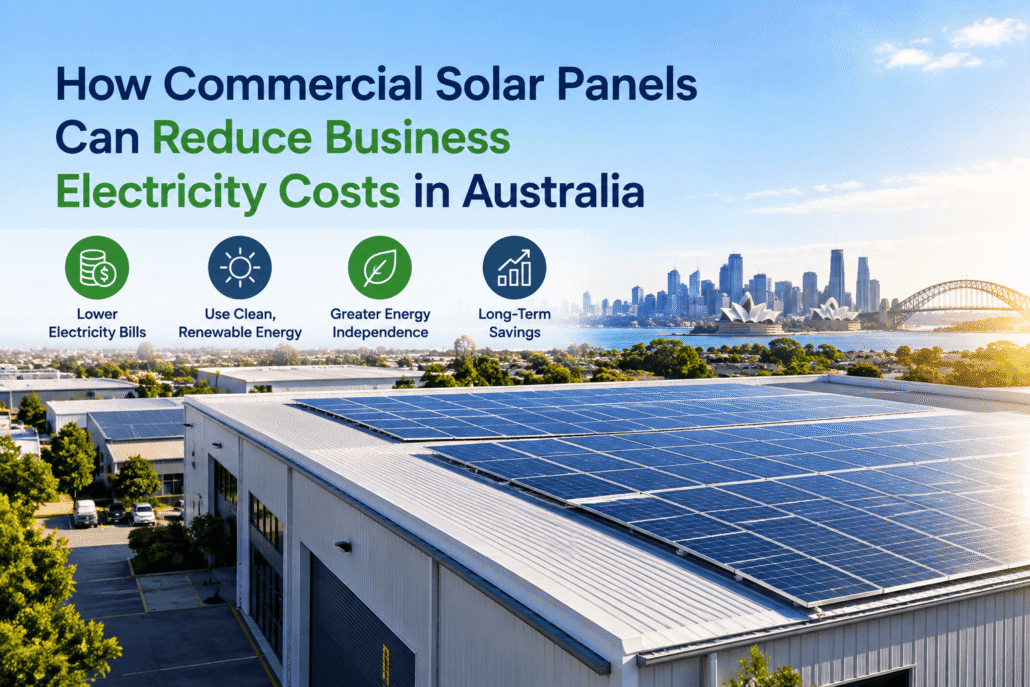
How Commercial Solar Panels Can Reduce Business Electricity Costs in Australia
For Australian businesses, electricity is often a significant ongoing operating expense. Offices, warehouses, retail stores, manufacturing facilities, restaurants and other commercial properties can consume substantial amounts of electricity throughout the day.
Commercial solar panels provide businesses with a practical way to generate electricity on-site and reduce their reliance on energy purchased from the grid. With the right system design, businesses can use solar energy during their operating hours, potentially lowering electricity bills and improving long-term energy cost management.
But how exactly do commercial solar panels reduce electricity costs, and what should Australian businesses consider before making the investment?
What Is Commercial Solar Power?
Commercial solar power uses photovoltaic (PV) solar panels installed on a business property to convert sunlight into electricity.
Unlike residential solar systems, commercial solar installations are often designed around larger electricity loads and may involve larger system capacities, more sophisticated monitoring and commercial-grade inverters.
A commercial solar system can be installed on:
- Office buildings
- Warehouses
- Factories
- Retail stores
- Restaurants and cafés
- Schools and educational facilities
- Agricultural and rural businesses
- Workshops and industrial properties
- Other commercial buildings
The electricity generated by the solar panels can be used directly by the business, reducing the amount of electricity that needs to be purchased from the electricity grid.
How Commercial Solar Panels Reduce Electricity Costs
The primary financial benefit of commercial solar is that a business can generate part of its own electricity rather than purchasing all of its energy from the grid.
There are several ways this can help reduce electricity costs.
1. Generate Electricity During Business Hours
Many Australian businesses use the most electricity during the daytime, which can align well with solar generation.
Solar panels generally produce electricity during daylight hours. If a business is operating during these periods, it can use the generated solar electricity immediately.
For example, a warehouse may use electricity for lighting, refrigeration, machinery, computers and other equipment during the day. A suitably sized solar system can generate electricity while these loads are operating.
This is known as solar self-consumption.
The more of the generated electricity a business can use on-site, the less electricity it may need to purchase from the grid.
2. Reduce Dependence on Grid Electricity
Without solar, a business generally purchases the electricity it needs from its energy retailer.
When solar panels generate electricity on-site, some of that demand can instead be supplied by the solar system.
This can reduce the volume of electricity purchased from the grid.
For businesses with consistent daytime energy consumption, this can make commercial solar particularly relevant because solar generation and electricity demand can occur at the same time.
3. Potentially Reduce Exposure to Changing Electricity Prices
Electricity prices can change over time, making energy budgeting more challenging for businesses.
Generating electricity on-site can provide greater control over a portion of a business’s energy supply.
Although commercial solar does not eliminate electricity costs completely, it can reduce reliance on externally purchased electricity and may help businesses manage their long-term energy expenses.
Actual savings depend on factors such as electricity tariffs, solar system size, energy consumption patterns and solar generation.
4. Export Excess Solar Electricity
A commercial solar system may sometimes generate more electricity than the business is using at that moment.
Depending on the electricity connection, retailer arrangement and applicable network requirements, excess electricity may be exported to the grid.
Businesses may receive a feed-in payment for eligible exported electricity.
However, export arrangements and rates vary, and businesses should not assume that exporting surplus electricity will provide the same financial benefit as using solar electricity on-site.
For this reason, commercial solar system design should consider the business’s actual electricity consumption profile.
5. Use Solar Energy With Battery Storage
Businesses that consume electricity outside normal daylight hours may consider adding battery storage to their solar system.
A commercial solar battery can store surplus solar electricity generated during the day and make that stored energy available later, subject to the battery system’s capacity and operating configuration.
This can potentially increase the amount of solar energy a business uses on-site.
Battery storage may be particularly relevant for businesses with:
- Evening electricity demand
- Overnight operations
- High peak electricity consumption
- Limited daytime solar consumption
- A need for additional energy management flexibility
The financial case for batteries should be assessed separately from the solar panel investment because installation costs, tariffs, demand charges, battery capacity and operating patterns can significantly affect the outcome.
Commercial Solar Can Help Businesses With High Daytime Energy Demand
One of the important factors when assessing commercial solar is when a business uses electricity.
A business that consumes a large amount of electricity during daylight hours may be able to use a significant portion of its solar generation directly.
For example, consider a commercial property with electricity demand from:
- Air conditioning
- Refrigeration
- Lighting
- Computers and office equipment
- Manufacturing equipment
- Pumps
- Machinery
- Heating and cooling systems
If these loads operate while the solar panels are producing electricity, the business may be able to increase its solar self-consumption.
This is why a professional solar assessment should look at electricity usage patterns rather than simply choosing the largest possible solar system.
Choosing the Right Commercial Solar System Size
The right solar system size depends on more than the available roof space.
A commercial solar assessment may consider:
- Historical electricity consumption
- Electricity bills
- Half-hourly or interval consumption data
- Business operating hours
- Roof orientation and available space
- Roof shading
- Solar panel efficiency
- Inverter capacity
- Current electricity tariffs
- Expected future electricity consumption
- Battery storage requirements
- Grid connection requirements
For example, a business that operates primarily during the day may have a different ideal system configuration from a business that operates mainly at night.
A correctly designed system aims to match solar generation with the business’s electricity requirements as effectively as possible.
Commercial Solar Panels and Return on Investment
Businesses generally want to understand how long it may take for their solar investment to pay for itself.
The payback period can vary considerably between businesses.
Factors that may affect commercial solar ROI include:
System installation cost: Larger systems generally require a larger initial investment.
Electricity consumption: Businesses with higher electricity consumption may have greater potential to use solar generation.
Solar self-consumption: Using solar electricity directly can affect the financial value of the system.
Electricity tariffs: The price a business pays for grid electricity influences potential savings.
Solar system performance: Panel orientation, shading, equipment quality and site conditions can affect generation.
Maintenance and operating costs: These should be considered when assessing the overall investment.
Future electricity prices: Changes in electricity costs can influence long-term savings.
A professional solar proposal should therefore consider the individual characteristics of the business rather than relying on a generic savings estimate.
Why Commercial Solar Is Becoming an Important Consideration for Australian Businesses
Australia has excellent solar resources, making solar power an important energy option for many commercial properties.
For businesses, the appeal of solar is not simply about generating renewable electricity. It can also be part of a broader strategy for managing operating expenses and energy consumption.
A well-designed commercial solar system may help a business:
- Reduce grid electricity purchases
- Increase energy independence
- Make better use of available roof space
- Improve control over daytime electricity costs
- Support renewable energy goals
- Prepare for changing energy requirements
For businesses considering sustainability initiatives, commercial solar can also complement broader environmental objectives.
Commercial Solar for Different Types of Australian Businesses
Commercial solar can be adapted to many different business environments.
Warehouses
Warehouses often have large roof areas that can provide space for solar panels. Electricity may be required for lighting, heating, cooling, refrigeration, material handling equipment and other operations.
Manufacturing Facilities
Manufacturing businesses can have significant electricity requirements due to machinery and production equipment. Solar can help supply a portion of this electricity demand during daylight operating hours.
Retail Businesses
Retail stores may use electricity for lighting, refrigeration, air conditioning, point-of-sale systems and other equipment. Solar can help offset part of their daytime electricity consumption.
Offices
Office buildings can use electricity for computers, lighting, air conditioning, lifts and other building services. Solar generation can be used during typical working hours.
Restaurants and Hospitality Businesses
Restaurants and hospitality venues can have substantial electricity requirements for refrigeration, cooking equipment, air conditioning and lighting. Their electricity consumption profile should be assessed carefully when designing a solar system.
Why Professional Commercial Solar Installation Matters
Commercial solar is a significant investment, so system design and installation quality are important.
A professional installer can assess the property, electricity usage and available roof space to develop a system that suits the business.
At Wels Commercial Solar, businesses can explore commercial solar solutions designed around their individual energy requirements.
A commercial solar assessment can help determine:
- Suitable solar system capacity
- Expected solar generation
- Potential solar self-consumption
- Suitable solar panels and inverters
- Battery storage requirements
- Installation considerations
- Potential electricity savings
This information allows a business owner to make an informed decision based on their property’s actual energy requirements.
Is Commercial Solar Worth Considering for Your Australian Business?
Commercial solar can provide Australian businesses with an opportunity to generate electricity on-site and reduce their dependence on grid-supplied power.
However, the potential financial benefits vary from one business to another. Electricity usage, system size, tariffs, operating hours, roof conditions, solar generation and future energy requirements all need to be considered.
For this reason, the best starting point is a site-specific commercial solar assessment rather than relying on general industry estimates.
If your business is considering solar, reviewing your electricity bills and energy consumption data can provide a useful first step toward understanding what type of commercial solar system may be suitable.
FAQs
How much can commercial solar panels reduce electricity bills?
The amount a business can save depends on its electricity consumption, solar system size, solar generation, electricity tariffs and how much of the generated electricity is used on-site. A professional assessment can provide a more realistic estimate based on the business’s actual energy usage.
Is commercial solar worth it for Australian businesses?
Commercial solar can be financially beneficial for some Australian businesses, particularly those with substantial daytime electricity consumption. However, the potential return depends on the individual property’s energy usage, electricity rates, system cost and solar generation.
How many solar panels does a commercial business need?
There is no single number suitable for every business. The required number of panels depends on the desired system capacity, panel wattage, available roof space, electricity consumption and site conditions.
Can commercial solar panels power a business during the night?
Solar panels only generate electricity when there is sufficient sunlight. Businesses requiring electricity at night can potentially use battery storage or continue purchasing electricity from the grid.
Can a business add batteries to an existing commercial solar system?
In many cases, battery storage can be incorporated into an existing solar installation, but compatibility and system design need to be assessed. A qualified solar professional can determine whether a particular existing system is suitable for battery integration.
What types of businesses can install commercial solar?
Commercial solar can be used by many types of businesses, including offices, warehouses, factories, retail stores, restaurants, schools, workshops and other commercial properties.
Does commercial solar work on cloudy days?
Solar panels can continue generating electricity during cloudy conditions, although output is generally lower than during periods of strong sunlight. Actual generation depends on weather conditions, panel technology and site characteristics.
How long do commercial solar panels last?
Solar panels are designed for long-term operation, but their performance can gradually decline over time. The expected lifespan and performance warranty depend on the specific solar panel manufacturer and model.
How long does commercial solar installation take?
Installation time varies depending on system size, roof conditions, electrical requirements, approvals and site complexity. A solar installer can provide a more accurate timeframe after assessing the property.
How do I get a commercial solar quote in Australia?
A business can contact a commercial solar installer and provide information such as recent electricity bills, property details and energy consumption data. A professional assessment can then help determine an appropriate system design and provide a tailored quotation.
Final Thoughts
Commercial solar panels can help Australian businesses reduce the amount of electricity they purchase from the grid by generating power on-site. For businesses with suitable properties and significant daytime energy consumption, solar can become an important part of their long-term energy strategy.
The key is choosing a system based on actual electricity usage rather than simply installing the largest possible system. A detailed assessment of energy consumption, roof space, solar generation, tariffs and future requirements can help businesses understand the potential benefits of commercial solar.
If you’re considering commercial solar in Australia, Wels Commercial Solar can assess your business’s requirements and help you explore a suitable solar solution.