
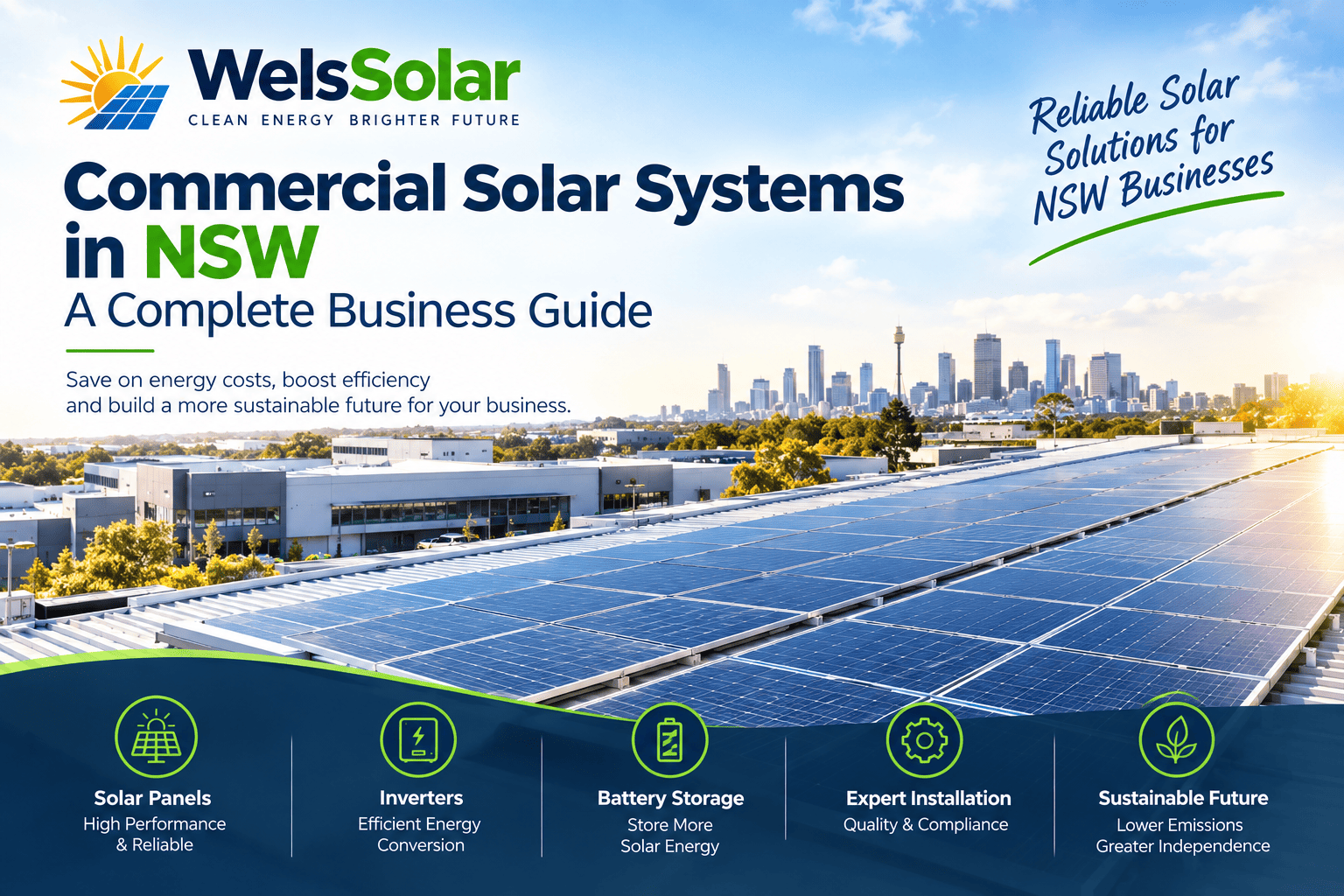
Commercial Solar Systems in NSW A Complete Business Guide
For many businesses across New South Wales, electricity is a significant operating expense. Rising energy costs, increasing demand for reliable power and growing sustainability expectations are encouraging businesses to consider commercial solar systems as a long-term energy strategy.
A well-designed commercial solar system in NSW can help a business generate electricity on-site, reduce reliance on the grid and make better use of available roof or property space. However, choosing the right system involves more than simply installing as many solar panels as possible.
This guide explains what NSW businesses should consider when planning a commercial solar installation, from system size and solar panels to inverters, battery storage, installation and potential incentives.
What Is a Commercial Solar System?
A commercial solar system uses photovoltaic solar panels to generate electricity for a business. The electricity generated by the panels can be used to power equipment, lighting, air conditioning, refrigeration, computers, machinery and other business operations.
A typical system includes:
- Solar panels
- Solar inverters
- Mounting equipment
- Electrical protection equipment
- Monitoring technology
- Cabling and related components
- Optional battery storage
The ideal system depends on the business’s electricity consumption, operating hours, available roof space, site conditions and future energy requirements.
Why NSW Businesses Are Choosing Commercial Solar
One of the biggest advantages of commercial solar is the ability to generate electricity where it is consumed.
Many businesses operate primarily during daylight hours, which can create a strong opportunity to use solar generation directly. Government business guidance also recommends understanding energy consumption before investing in efficiency and renewable-energy projects.
1. Reduce Electricity Costs
Solar can offset a portion of the electricity a business would otherwise purchase from the grid. The potential savings depend on system size, electricity consumption, tariff structure, solar generation and how much electricity is used during solar production hours.
2. Improve Energy Independence
Generating electricity on-site can reduce dependence on grid electricity. Adding battery storage can provide another level of energy management by storing excess solar generation for later use.
3. Make Better Use of Commercial Roof Space
Warehouses, factories, offices, retail buildings and other commercial properties often have substantial roof areas that can potentially accommodate solar panels.
4. Support Sustainability Goals
Solar power provides businesses with a renewable electricity source and can support broader sustainability and emissions-reduction objectives.
For larger NSW businesses, solar can also form part of a wider energy-management or net-zero strategy. The NSW Government’s Net Zero Business Guide encourages businesses to identify energy-saving opportunities and develop structured decarbonisation plans.
How Large Should a Commercial Solar System Be?
There is no single solar system size that suits every business.
A proper system design should consider:
- Historical electricity consumption
- Electricity bills and tariff structure
- Business operating hours
- Daytime energy consumption
- Roof size and orientation
- Roof condition
- Available solar exposure
- Existing electrical infrastructure
- Future business expansion
- Battery storage requirements
- Grid connection requirements
For example, a business operating heavy machinery during the day may have a very different solar requirement from an office that uses most of its electricity for lighting, computers and air conditioning.
The objective should not simply be to install the largest possible system. Instead, the system should be designed around the business’s actual energy profile.
Choosing the Right Solar Panels
Solar panels are one of the most important components of a commercial solar installation.
Businesses should consider:
- Panel efficiency
- Product warranty
- Performance warranty
- Manufacturer reputation
- Available roof space
- Temperature performance
- Installation conditions
- Long-term reliability
Higher-efficiency panels can be particularly useful when roof space is limited because they can generate more electricity from a smaller area.
WelsSolar provides commercial solar solutions using established solar panel and inverter technologies, with system selection based on the requirements of the individual project.
Why the Solar Inverter Matters
Solar panels generate DC electricity, while most commercial buildings use AC electricity. The solar inverter converts the electricity into a usable form for the property and plays an important role in system performance and monitoring.
The right inverter should be selected according to:
- Solar system size
- Panel configuration
- Electrical requirements
- Monitoring needs
- Battery compatibility
- Future expansion
- Site conditions
WelsSolar offers solar inverter solutions from leading manufacturers including GoodWe, Fronius, AlphaESS and Sungrow.
For businesses considering battery storage or future system expansion, selecting a suitable inverter from the beginning can help create a more flexible energy system.
Should Your Business Add Battery Storage?
Solar panels generate electricity during the day, but businesses may continue using energy after solar production falls.
A commercial battery can store excess solar energy and make it available when needed. This can increase the amount of generated solar energy that a business uses on-site.
NSW currently has a Batteries for Businesses incentive available from 1 September 2026. Eligible NSW businesses can receive an upfront discount when installing qualifying battery systems, with a larger discount potentially available when new solar and battery capacity are installed together.
Eligibility, system requirements and incentive amounts should always be confirmed before making a purchasing decision.
What Does Commercial Solar Cost in NSW?
The cost of a commercial solar system depends on several factors rather than simply the number of panels.
Important cost factors include:
- System capacity
- Solar panel selection
- Inverter technology
- Battery storage
- Roof access
- Mounting requirements
- Electrical upgrades
- Installation complexity
- Grid connection requirements
- Monitoring equipment
- Project-specific engineering
Businesses should compare quotes based on the complete system rather than choosing solely on the lowest upfront price.
A quality commercial solar quote should clearly explain the proposed system design, components, installation requirements, warranties, expected performance and applicable incentives.
Choosing a Commercial Solar Installer
Choosing the right installer is just as important as choosing the right equipment.
Before proceeding, businesses should ask potential installers about:
- Previous commercial solar projects
- Installer accreditation and licensing
- Panel and inverter brands
- Product and installation warranties
- System monitoring
- Grid connection arrangements
- Expected system performance
- Maintenance and support
- Project timeline
- Available incentives
NSW Government guidance recommends comparing multiple quotes and checking that proposals include a site-specific design, performance estimate, itemised components, warranties and a breakdown of costs and incentives.
NSW Compliance and Future-Ready Solar Systems
Commercial solar installations need to meet applicable electrical, connection and safety requirements.
NSW is also introducing new compliance processes for consumer energy resources. From late 2026, new and upgraded rooftop solar and battery systems up to 200kW will be progressively incorporated into the NSW Consumer Energy Resources Installer Portal and Emergency Backstop requirements.
This makes it particularly important for businesses to work with an experienced installer who understands current NSW requirements and can design systems with future compliance in mind.
Is Commercial Solar Worth It for Your NSW Business?
For many NSW businesses, commercial solar can be a practical way to manage electricity costs while increasing the use of renewable energy.
The best investment is not necessarily the cheapest system or the system with the highest panel count. A successful project should balance energy consumption, system performance, installation cost, available roof space, future energy needs and long-term reliability.
Businesses considering solar should begin by reviewing their electricity bills and consumption patterns. From there, a professional site assessment and system proposal can help determine the appropriate solar capacity and whether battery storage makes financial and operational sense.
Final Thoughts
A commercial solar system in NSW can provide businesses with an opportunity to generate their own renewable electricity and reduce dependence on grid power. With the right combination of solar panels, inverter technology, battery storage and professional installation, a commercial solar system can become an important part of a business’s long-term energy strategy.
WelsSolar provides solar solutions for residential and commercial applications, helping NSW businesses assess their energy requirements and choose suitable solar technologies.
If your business is considering commercial solar, start with an energy assessment and request a site-specific proposal rather than relying on a standard system package.
FAQs
1. What is a commercial solar system?
A commercial solar system is a photovoltaic electricity system designed to generate power for businesses such as offices, warehouses, factories, retail stores and other commercial properties.
2. How many solar panels does a business need?
The number of panels depends on electricity consumption, desired system capacity, panel wattage, available roof space and site conditions. A professional system assessment is recommended.
3. Is battery storage necessary for commercial solar?
No. A business can install solar without batteries. However, battery storage can help store excess solar electricity for use when solar generation is lower.
4. Can NSW businesses receive incentives for batteries?
Eligible NSW businesses may be able to access the current Batteries for Businesses incentive. The discount depends on eligibility and system requirements, so businesses should confirm the current conditions before proceeding.
5. How long does a commercial solar installation take?
Installation time varies according to system size, roof access, electrical requirements, engineering, equipment availability and grid connection requirements.
6. What solar panels are best for a commercial building?
The best panels depend on the building and project requirements. Efficiency, warranty, reliability, available roof space and overall system value should all be considered.
7. What does a solar inverter do?
A solar inverter converts the DC electricity generated by solar panels into AC electricity that can be used by the business and manages important aspects of the solar system.
8. How do I choose a commercial solar installer in NSW?
Compare several detailed proposals and check the installer’s experience, accreditation, equipment, warranties, system design, expected performance and after-sales support.